

 Tiếng Việt
 中文 (中国)
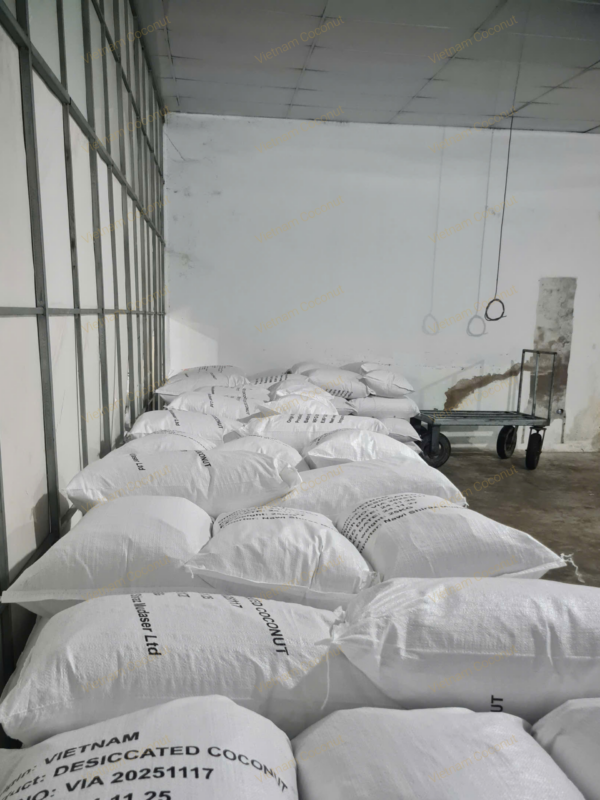
Desiccated Coconut Storage plays a critical role in maintaining product quality, shelf life, and food safety throughout the supply chain. Even high-quality desiccated coconut can quickly lose value if stored under improper temperature or humidity conditions. For importers, food manufacturers, and bulk buyers, understanding the ideal storage environment is essential to preventing moisture absorption, mold growth, rancidity, and costly product losses.
Why Proper Desiccated Coconut Storage Matters
Desiccated coconut is a low-moisture food ingredient widely used in bakery, confectionery, cereal, snack, and dairy-alternative applications. While its low moisture content contributes to a relatively long shelf life, it also makes the product highly sensitive to environmental conditions during warehousing and transportation.
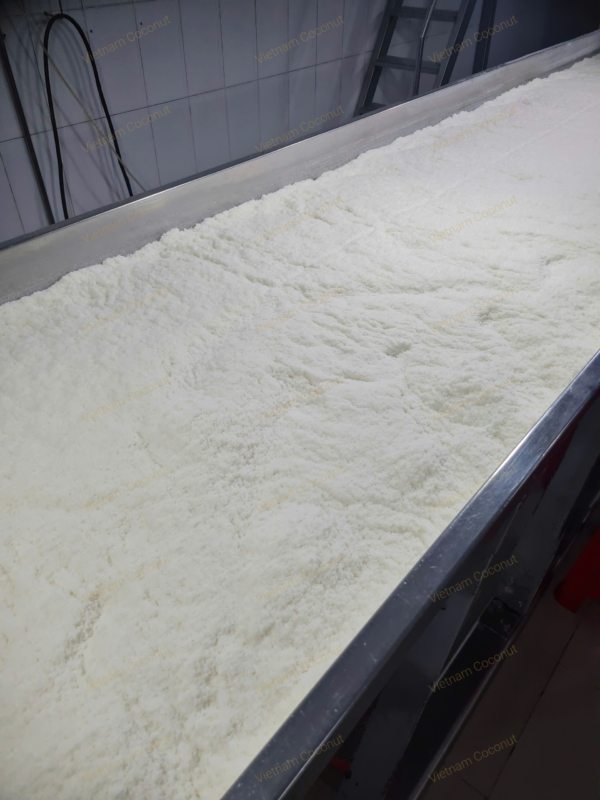
Improper Desiccated Coconut Storage can lead to several quality issues:
- Moisture absorption and clumping
- Mold and yeast growth
- Off-flavors and odor contamination
- Oxidative or hydrolytic rancidity
- Color changes and discoloration
- Reduced shelf life
- Product rejection by customers
Because desiccated coconut contains a relatively high fat content, protecting it from humidity, heat, and oxygen exposure is just as important as protecting it from microbial contamination.
Industry references generally recommend maintaining moisture levels at or below 3–4% because higher moisture significantly increases the risk of spoilage and quality deterioration.
For manufacturers purchasing large volumes, proper storage management directly impacts production efficiency, inventory value, and customer satisfaction.
Recommended Temperature and Humidity for Desiccated Coconut Storage
The most common question among buyers is:
“What are the ideal storage conditions for desiccated coconut?”
While recommendations vary slightly among manufacturers and specifications, industry guidance remains remarkably consistent.
Ideal Storage Conditions
| Parameter | Recommended Range |
|---|---|
| Temperature | 10°C–15°C (50°F–59°F) |
| Relative Humidity | 50%–60% |
| Product Moisture Content | ≤ 3–4% |
| Storage Area | Clean, dry, odor-free |
| Direct Sunlight | Avoid |
| Contact with Walls | Avoid |
Multiple industry specifications recommend storing desiccated coconut between 10°C and 15°C with relative humidity around 50–60% to maximize shelf life and minimize moisture-related risks.
In practical export environments where cold storage may not always be available, many suppliers recommend maintaining temperatures below 25°C and humidity below 60% whenever possible.
Quick Reference Storage Table
| Storage Condition | Impact on Product |
|---|---|
| 10–15°C, RH 50–60% | Optimal long-term storage |
| 15–20°C, RH <60% | Acceptable for most warehouses |
| Above 25°C | Increased oxidation risk |
| RH above 65% | Higher mold and clumping risk |
| Direct sunlight exposure | Accelerated quality degradation |
| Strong odor exposure | Flavor contamination risk |
For large-scale food manufacturers, temperature and humidity monitoring should be considered part of the overall quality assurance program.
How Temperature Affects Desiccated Coconut Quality
Temperature is one of the most important factors in Desiccated Coconut Storage because it directly affects fat stability and shelf life.
Desiccated coconut naturally contains a significant amount of coconut oil. Although coconut oil is relatively stable compared to some vegetable oils, prolonged exposure to elevated temperatures can accelerate deterioration.
Risks of High Storage Temperatures
When storage temperatures consistently exceed recommended levels, buyers may encounter:
- Faster oxidation of fats
- Development of rancid flavors
- Yellowing or darkening of product color
- Loss of fresh coconut aroma
- Reduced shelf life
Several commercial specifications recommend maintaining storage temperatures below 20°C whenever feasible and ideally within the 10–15°C range for long-term storage.
Does Desiccated Coconut Require Refrigeration?
Not necessarily.
Most export-grade desiccated coconut is shipped and stored in dry warehouses rather than refrigerated facilities. However, refrigeration may provide additional protection in regions with:
- Extremely hot climates
- Long storage periods
- High-fat coconut products
- Extended transportation routes
For standard industrial use, maintaining a cool, dry environment is generally sufficient.
The goal is not refrigeration itself but maintaining stable storage conditions.
Why Humidity Control Is Even More Important Than Temperature
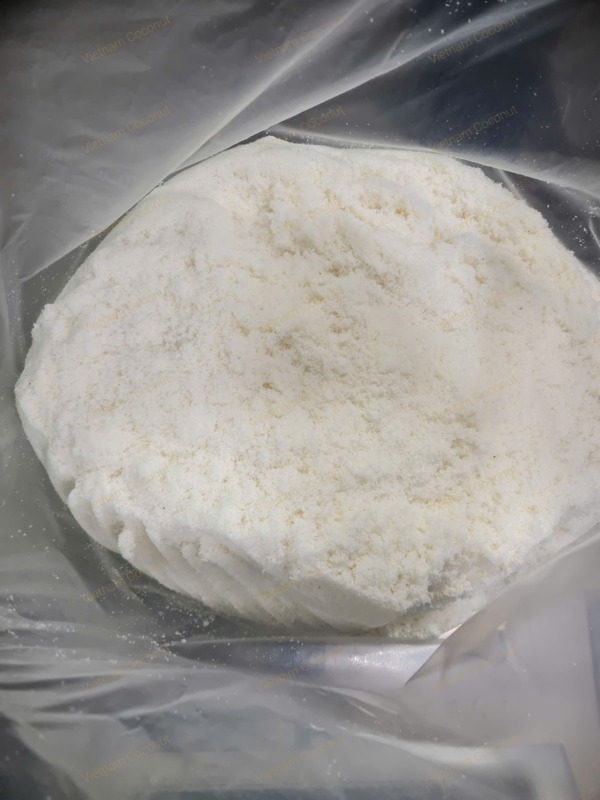
Many experienced exporters consider humidity control to be the most critical aspect of Desiccated Coconut Storage.
Because desiccated coconut is highly hygroscopic, it readily absorbs moisture from surrounding air.
What Happens When Humidity Is Too High?
When relative humidity exceeds recommended levels:
- Product begins absorbing moisture
- Clumping and caking occur
- Mold growth risk increases
- Microbial stability decreases
- Shelf life shortens
Industry guidance consistently warns that damp coconut rapidly develops spoilage issues, including mold growth and rancidity.
Recommended Humidity Levels
| Relative Humidity | Storage Risk |
|---|---|
| Below 50% | Excellent |
| 50–60% | Ideal |
| 60–65% | Monitor closely |
| Above 65% | Elevated risk |
| Above 70% | High spoilage risk |
Food manufacturers storing large inventories should invest in:
- Humidity sensors
- Warehouse monitoring systems
- Dehumidification equipment where necessary
The cost of humidity control is often significantly lower than the cost of product losses caused by moisture damage.
Best Warehouse Practices for Bulk Desiccated Coconut Storage
Beyond temperature and humidity, warehouse management practices greatly influence product quality.
Recommended Storage Practices
Store in a Clean and Odor-Free Environment
Desiccated coconut easily absorbs surrounding odors.
Avoid storing near:
- Chemicals
- Cleaning agents
- Spices
- Strong-smelling raw materials
- Fuel sources
Several supplier specifications specifically recommend odor-free storage areas.
Keep Bags Away from Walls
A common mistake in bulk warehouses is stacking bags directly against walls.
This can lead to:
- Condensation exposure
- Moisture migration
- Uneven airflow
Instead:
- Maintain clearance from walls
- Use pallets
- Allow adequate air circulation
Protect Against Direct Sunlight
Even in indoor storage, sunlight exposure can increase localized temperatures and accelerate product degradation.
Maintain FIFO Inventory Management
First-In-First-Out (FIFO) inventory management helps ensure older stock is used first, minimizing aging-related quality issues.
Warehouse Storage Checklist
| Item | Recommendation |
|---|---|
| Palletized Storage | Yes |
| Direct Floor Contact | No |
| Wall Clearance | Minimum 30 cm |
| Odor-Free Area | Required |
| Temperature Monitoring | Recommended |
| Humidity Monitoring | Highly Recommended |
| FIFO System | Required |
Packaging Requirements for Long-Term Desiccated Coconut Storage
Packaging serves as the first line of defense against moisture and contamination.
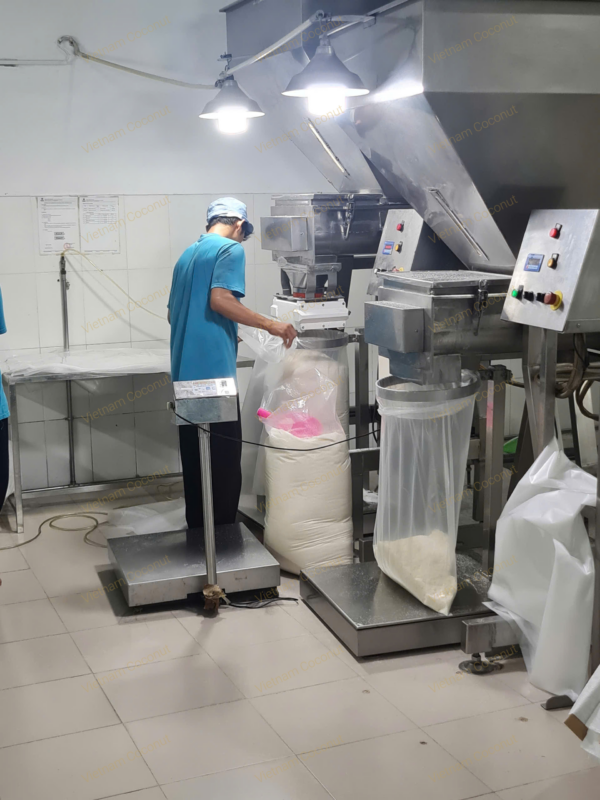
Most export-grade desiccated coconut is packed in:
- Multiwall kraft paper bags
- Food-grade PE-lined bags
- Moisture-resistant packaging systems
Common Export Packaging
| Packaging Type | Typical Use |
|---|---|
| 25 kg PE-lined paper bag | Industrial buyers |
| 50 kg PE-lined bag | Bulk export |
| Vacuum packaging | Specialized applications |
| Customized packaging | OEM and private label projects |
Many manufacturers use polyethylene liners specifically to reduce moisture penetration during storage and transport.
Packaging integrity should be inspected regularly for:
- Tears
- Holes
- Damaged seals
- Water exposure
Even small packaging defects can compromise product stability.
Storage Considerations During International Shipping
For importers sourcing from overseas suppliers, Desiccated Coconut Storage begins before the product reaches the destination warehouse.
Does Desiccated Coconut Need a Reefer Container?
In most cases, no.
Desiccated coconut is typically transported using:
- Dry containers
- Moisture-controlled packaging
- Container desiccants when required
However, reefer containers may be considered for:
- Long transit times
- Extremely hot shipping routes
- Premium product categories
Shipping Best Practices
| Factor | Recommendation |
|---|---|
| Container Type | Dry container |
| Moisture Control | Desiccant bags recommended |
| Pallet Protection | Required |
| Container Inspection | Before loading |
| Ventilation | As required by route |
Preventing moisture ingress during transit is often more important than maintaining refrigerated conditions.
How Long Can Desiccated Coconut Be Stored?
Shelf life depends on several factors:
- Storage temperature
- Relative humidity
- Fat content
- Packaging quality
- Presence of preservatives
- Processing method
Typical Shelf Life
| Product Type | Typical Shelf Life |
|---|---|
| Standard Desiccated Coconut | 9–12 months |
| SO₂-Treated Product | Up to 12 months |
| Premium Controlled Storage | Up to 12 months or longer |
Many supplier specifications indicate shelf lives ranging from 9 to 12 months when recommended storage conditions are maintained.
The key takeaway is that shelf life claims are only valid when proper Desiccated Coconut Storage practices are consistently followed.
Conclusion
Effective Desiccated Coconut Storage is essential for preserving product quality, protecting food safety, and maximizing inventory value. For food manufacturers, importers, and bulk buyers, the ideal storage environment typically includes temperatures between 10°C and 15°C, relative humidity between 50% and 60%, moisture-proof packaging, and clean, odor-free warehouse conditions.
By implementing proper temperature control, humidity management, packaging protection, and warehouse best practices, businesses can significantly reduce spoilage risks and maintain product performance throughout the supply chain.
In global food manufacturing, storage is not merely a warehousing function—it is a critical component of quality assurance. Companies that invest in proper desiccated coconut storage systems are better positioned to ensure consistent product quality, longer shelf life, and stronger customer confidence.
Contact:
📩 Email: admin@vietnam-coconut.com
📞 Tel / WhatsApp: (+84) 931 442 377
🔗 LinkedIn: Vietnam Coconut
