

 Tiếng Việt
 中文 (中国)
Coconut seedlings are the foundation of every successful coconut plantation. Whether you are establishing a large-scale coconut farm, expanding raw material supply for food processing, or investing in long-term agricultural projects, choosing the right seedlings can significantly impact productivity, disease resistance, and profitability.
This guide explores how commercial growers and investors can select, evaluate, and source high-quality coconut seedlings for sustainable production.
Why Coconut Seedlings Matter in Commercial Coconut Production
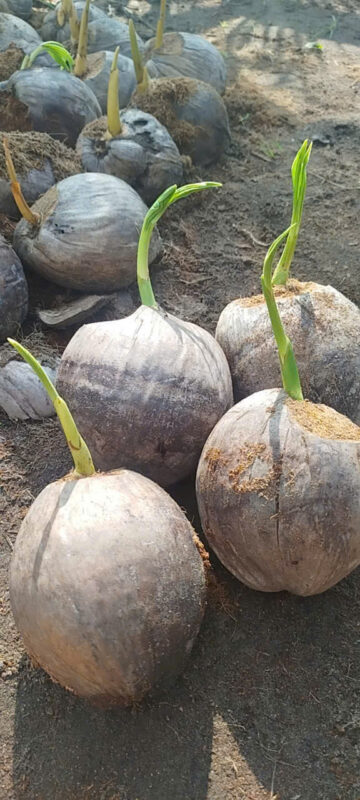
For commercial coconut farming, the quality of planting material determines the long-term performance of the plantation. A coconut tree may remain productive for decades, making the initial seedling selection one of the most important investment decisions.
High-quality coconut seedlings contribute to:
- Faster establishment and growth
- Earlier fruit production
- Higher yields per hectare
- Improved resistance to pests and diseases
- Better adaptability to local climate conditions
- More consistent coconut quality
Poor-quality seedlings, on the other hand, often result in uneven growth, lower productivity, and higher maintenance costs throughout the plantation’s lifecycle.
For food manufacturers and coconut processors seeking a reliable raw material supply, investing in superior planting material is essential for ensuring long-term sustainability.
Economic Impact of Seedling Quality
| Factor | High-Quality Seedlings | Poor-Quality Seedlings |
|---|---|---|
| Growth Rate | Faster | Slower |
| Yield Potential | High | Unpredictable |
| Disease Resistance | Better | Lower |
| Plantation Uniformity | Consistent | Variable |
| Long-Term ROI | Higher | Lower |
Types of Coconut Seedlings Available for Commercial Plantations
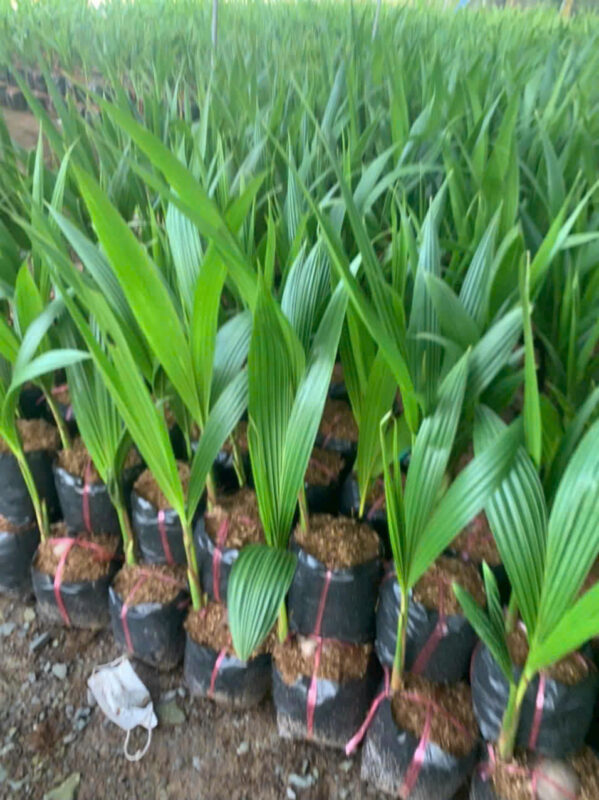
Selecting the right variety is as important as choosing healthy seedlings.
Tall Coconut Varieties
Tall coconuts are widely cultivated for commercial production due to their longevity and high yield potential.
Characteristics include:
- Productive lifespan of 60–80 years
- Strong adaptability
- Large canopy development
- Suitable for copra and industrial applications
Dwarf Coconut Varieties
Dwarf varieties are increasingly popular for fresh coconut water production.
Advantages include:
- Earlier fruiting
- Easier harvesting
- Higher planting density
- Attractive for beverage markets
Hybrid Coconut Seedlings
Hybrid coconut seedlings combine desirable traits from tall and dwarf varieties.
Benefits often include:
- Higher yields
- Earlier production
- Better disease tolerance
- Improved coconut water quality
Comparison of Coconut Types
| Variety | First Harvest | Lifespan | Typical Use |
|---|---|---|---|
| Tall Coconut | 6–8 years | 60–80 years | Copra, processing |
| Dwarf Coconut | 3–4 years | 30–40 years | Fresh coconut water |
| Hybrid Coconut | 4–5 years | 40–60 years | Commercial plantations |
How to Identify High-Quality Coconut Seedlings
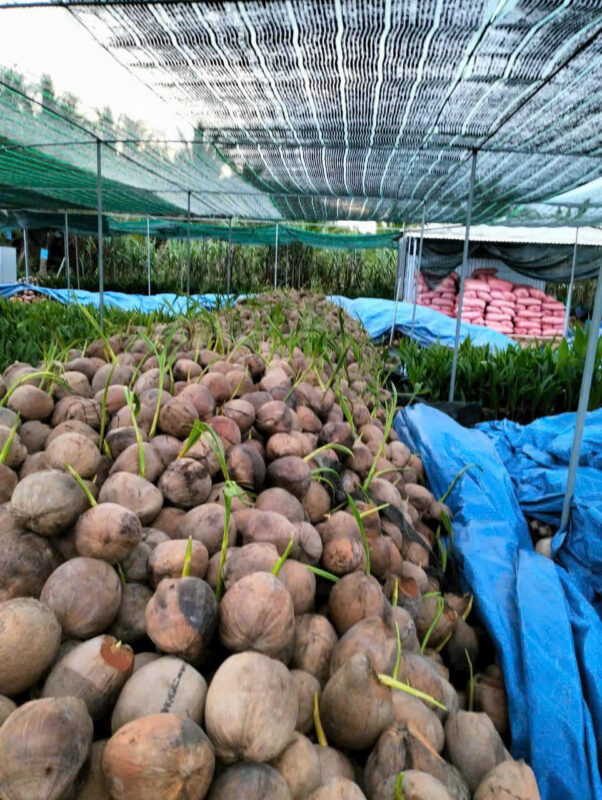
Not all seedlings offered in the market meet commercial standards.
Healthy Root Development
The root system should be well developed and free from visible damage.
Look for:
- Strong root emergence
- Healthy white roots
- No signs of rot
- Good root distribution
Vigorous Leaf Growth
Healthy coconut seedlings typically display:
- Green leaves
- Upright growth
- Uniform appearance
- No discoloration
Proper Seed Nut Condition
The seed nut should remain intact and free from:
- Cracks
- Mold
- Pest damage
- Excessive dehydration
Quality Assessment Checklist
| Parameter | Desired Condition |
|---|---|
| Leaves | Green and healthy |
| Roots | Strong and active |
| Stem | Straight and sturdy |
| Seed Nut | Intact and disease-free |
| Uniformity | Consistent growth |
Ideal Growing Conditions for Coconut Seedlings
Environmental conditions significantly influence seedling performance.
Climate Requirements
Coconut palms thrive in tropical regions with:
- Temperatures between 25°C and 32°C
- High sunlight exposure
- Moderate to high rainfall
- Low risk of frost
Soil Conditions
The best soils for coconut seedlings include:
- Sandy loam soils
- Well-drained soils
- Organic matter-rich soils
- Slightly acidic to neutral pH
Water Requirements
Young seedlings require consistent moisture without waterlogging.
Proper irrigation helps:
- Root establishment
- Nutrient uptake
- Uniform growth
Common Challenges in Coconut Seedling Production
Commercial growers should be aware of potential risks.
Disease Issues
Common problems include:
- Root rot
- Fungal infections
- Leaf spot diseases
Preventive management is critical during nursery stages.
Nutrient Deficiencies
Young seedlings may suffer from:
- Potassium deficiency
- Nitrogen deficiency
- Magnesium deficiency
Balanced fertilization programs help maintain vigorous growth.
Poor Nursery Management
Low-quality nursery practices often lead to:
- Weak root systems
- Uneven growth
- Reduced transplant survival rates
Best Practices for Establishing a Commercial Coconut Plantation
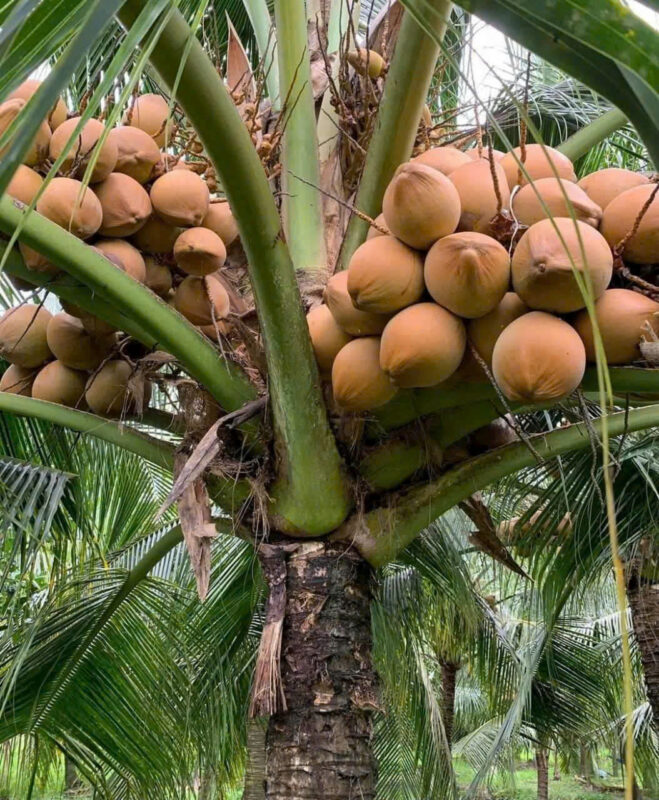
The success of a plantation depends not only on seedling quality but also on planting management.
Site Preparation
Before transplanting:
- Clear weeds and debris
- Improve soil drainage
- Conduct soil testing
- Prepare planting holes properly
Planting Density
Recommended spacing varies by variety.
| Variety | Typical Spacing |
|---|---|
| Tall Coconut | 8–9 meters |
| Dwarf Coconut | 6–7 meters |
| Hybrid Coconut | 7–8 meters |
Proper spacing improves sunlight penetration and long-term productivity.
Early Plantation Care
During the first few years:
- Irrigate regularly
- Control weeds
- Apply balanced fertilizers
- Monitor pest activity
Why Coconut Seedlings Are Important for Food Industry Supply Chains
Global demand for coconut products continues to grow.
Products driving demand include:
- Coconut water
- Desiccated coconut
- Coconut milk
- Coconut oil
- Coconut flour
- Coconut chips
As food manufacturers seek reliable raw material sources, investment in high-quality coconut seedlings becomes increasingly important.
A productive plantation starts with quality planting material and ultimately supports long-term supply chain stability.
Plantation Investment Benefits
| Benefit | Impact |
|---|---|
| Stable Coconut Supply | Supports processing operations |
| Higher Productivity | Improves profitability |
| Better Fruit Quality | Enhances product consistency |
| Sustainable Growth | Long-term raw material security |
Why Vietnam Is Emerging as a Source of Quality Coconut Seedlings
Vietnam has become one of Asia’s most important coconut-producing countries, particularly in the Mekong Delta region.
Advantages include:
- Favorable tropical climate
- Extensive coconut-growing expertise
- Diverse coconut varieties
- Growing commercial plantation sector
Vietnamese growers have developed strong experience in producing coconut seedlings suitable for both domestic cultivation and international agricultural projects.
How to Choose a Reliable Coconut Seedling Supplier
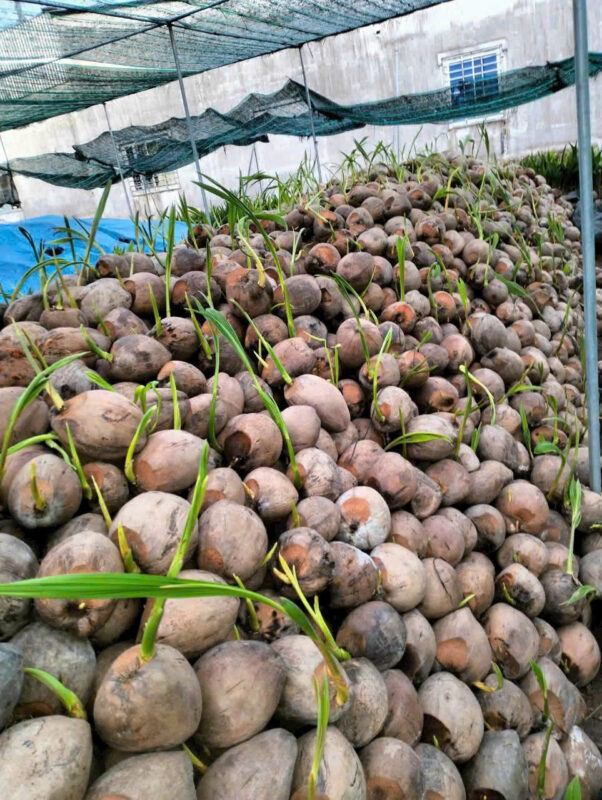
Selecting a supplier requires careful evaluation.
Supplier Evaluation Checklist
| Criteria | What to Verify |
|---|---|
| Nursery Experience | Years of operation |
| Variety Authenticity | Verified genetic origin |
| Plant Health | Disease-free certification |
| Production Capacity | Ability to supply large volumes |
| Technical Support | Agronomic guidance |
| Reputation | References and track record |
A trustworthy supplier should provide transparency regarding seedling origin, cultivation methods, and expected field performance.
Future Trends in Commercial Coconut Cultivation
Several factors are driving investment in coconut plantations worldwide:
Growing Demand for Coconut Ingredients
Global consumption continues increasing across food and beverage industries.
Expansion of Coconut Water Markets
Demand for fresh coconut water supports planting of high-yield varieties.
Sustainable Agriculture Initiatives
Coconut cultivation is increasingly integrated into long-term agricultural development projects.
Supply Chain Security
Manufacturers are investing in upstream farming operations to secure raw material availability.
These trends are expected to increase demand for premium coconut seedlings in the coming years.
Conclusion
High-quality coconut seedlings are the foundation of productive and profitable coconut plantations. For investors, commercial growers, and food manufacturers, selecting the right variety and sourcing healthy planting material can significantly influence long-term yields, product quality, and return on investment.
As global demand for coconut-based products continues to rise, establishing plantations with carefully selected coconut seedlings is becoming an increasingly strategic decision. By partnering with experienced nurseries and implementing proper cultivation practices, businesses can build sustainable coconut supply chains that support growth for decades to come.
Contact:
📩 Email: admin@vietnam-coconut.com
📞 Tel / WhatsApp: (+84) 931 442 377
🔗 LinkedIn: Vietnam Coconut
